
John Wycliffe on Holiness
When monks get it wrong
Manmade religion thrives because we are ignorant of God’s word.
Religion tells us that repentance means “turn from sin,” so we get busy turning from sin.
Religion tells us that confession means “review your sins,” so we get busy reviewing our sins.
Religion tells us that holiness means “avoid sin and sinners,” so we do that too.
And the result is an irrelevant and disengaged church that is riddled with unbelief and devoid of the supernatural.
How much better if we listened to God and spoke his language. How much better if we viewed the Bible as useful for training in righteousness instead of looking to manmade tradition.
Take the word “holy”, for example. Do you know what this word means?
Look up the word holy in a dictionary and you will see that it means sacred, consecrated, or religious. But these are poor definitions that do not describe a holy God. God is not religious.
Holiness means wholeness
To say that God is holy is to refer to the wholeness, fullness, beauty, and abundant life that overflows within the Godhead. God lacks nothing. He is unbroken, undamaged, unfallen, completely complete and entire within himself. He is the indivisible One, wholly self-sufficient, and the picture of perfection.
Holy means whole or complete. At least, that’s what the word originally meant, but we changed it to something else.
Under the old covenant, the Israelites were commanded to avoid unclean things and to distinguish between the holy and the profane (Lev. 10:10, Eze. 20:7, 22:26). This fueled the notion that holiness means being separate from sinners and the world in general.
(Sidebar: Jesus, the Holy One, was the friend of sinners. He touched them, laid hands on them, and ate with them. Jesus didn’t pray that we would be taken out of the world, but that we would be sanctified in it (John 17:15-18). True holiness runs from nothing.)
A famous 19th century evangelist once said, “Holiness is moral perfection, and nothing short of moral perfection, or moral rectitude, is holiness.” Many eastern gurus would agree with him. In many of the world’s religions, holiness is the result of rule-keeping and good behavior.
The problem with these definitions is they promote dead works and self-trust. If fourteen centuries of the law-keeping covenant taught us anything, it’s that people cannot make themselves holy. We might as well try and climb to the moon.
John Wycliffe on Holiness
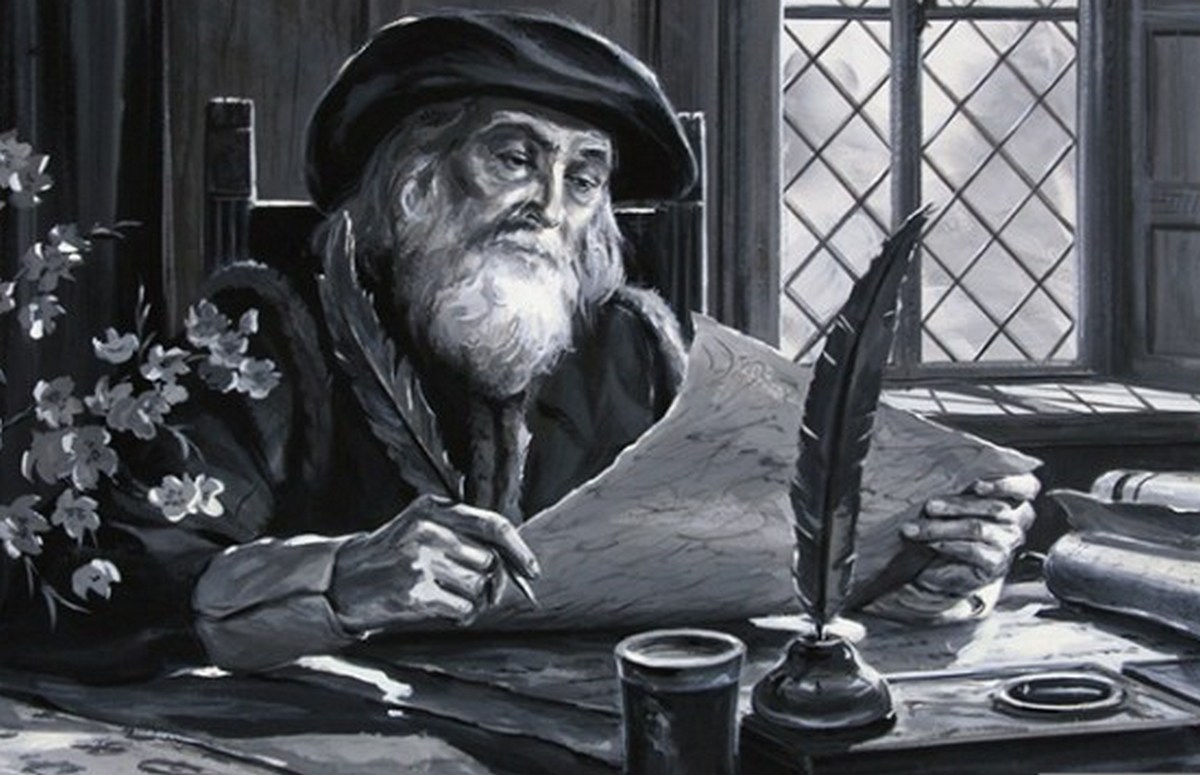
The English word holy comes from the Old English word halig which means whole and hale. When John Wycliffe and his associates began writing the first English Bible in the fourteenth century, this is what the word holy meant to them. It meant wholeness, completion, or perfection. When the earliest English translators wrote about a God who is holy, they understood that they were writing about a God who is whole and perfect in every way.
Wycliffe was a brave man who was persecuted for his convictions. In defining holy as whole, he was departing from the Latin tradition of defining holy as set apart.
Latin meaning of holy: set apart
Middle English meaning: whole
Sadly, Wycliffe’s interpretation didn’t stick. Ask any English-speaking churchgoer today what holy means and they’ll likely give you the Latin interpretation rather than Wycliffe’s.
A Biblical definition of holiness
John Wycliffe was all well and good, but what does the Bible actually say? We get some insight into the true meaning of holiness by looking at the Old Testament. The passage below is the first time in the Bible that God is described as holy:
For I am the Lord who brought you up from the land of Egypt to be your God; thus you shall be holy, for I am holy. (Lev. 11:45)
The Hebrew word for holy is the adjective qadowsh which is related to the verb qadash and the noun qodesh. The first time any of these words appears in the Bible is in Genesis:
Then God blessed the seventh day and sanctified it. (Genesis 2:3)
If we want to know the true meaning of holiness, it will help if we consider why God made the seventh creation day holy.
When God made the stars, planets, trees and animals, it was good but not holy. It was not until Day Seven that God looked at creation and said, “This is particularly good day. I’m going to sanctify it and make it holy.”
What made the seventh day more special than the rest? Look at how the seventh day is described in Genesis:
Thus the heavens and the earth were completed, and all their hosts. By the seventh day God completed his work which he had done… (Gen 2:1-2)
The seventh day was a holy day or a holiday because the work of creation had been completed. The world was whole and perfect and good in every way. To be holy is to be wholly whole, completely complete, and perfectly perfect.
Life as one long holiday
Adam and Eve began their new lives on a holiday, and so did you. The day you began your new life in Christ you were made whole and holy. The new you is complete in him (Col. 2:10).
Which means you do not need to waste your life examining your navel for sin. Nor should you run from sinners. (Can you imagine Jesus doing that?)
Your heavenly Father is holy and you carry his holy DNA. What does that mean? That’s for him to reveal and you to find out.
The life God intends for you is one of joyful discovery. It is learning to live loved (because you are loved) and being holy (because you are holy). It is growing into who you already are in Christ.
The Christian life is not striving to perfect what he started; it is resting in his finished work and holidaying in his holiness.
—
Jerome of Stridon was a monk who lived in a cave and slept on a rock pillow. Jerome had a short temper but managed his anger problem by beating himself with a rock. Jerome is more famous for writing history’s most influential Bible, the Latin Vulgate. When it came to defining “holiness”, Jerome borrowed heavily from the idol-worshipping cultures of his time. John Wycliffe and others went in a different direction, but it’s Jerome who still shapes our thinking today. If you want to dig deeper, check out my 20 page study note “The True Meaning of Holiness: From St. Jerome to John Wycliffe and Back Again.” It’s available now on Patreon.


Oh my goodness!!! Thank you, Paul! This is brilliant and so freeing!
Wycliffe was not martyred. He died naturally on December 31, 1384, from a stroke while at Mass in Lutterworth. * John Wycliffe (c. 1328–1384) and his associates produced the first complete English Bible translation from the Latin Vulgate around 1382 (Early Version; later revised). They used forms like hooly or holy for Latin sanctus/sanctus est, following standard Middle English. – This seem contradictory to your findings ? * There is no strong historical evidence that Wycliffe specifically “defined holy as whole” as a deliberate theological departure from Latin tradition, or that he emphasized wholeness/completion/perfection over set apart in his writings on holiness. Searches for direct quotes or analyses tying Wycliffe to this etymological point turn up modern devotional interpretations rather than primary sources from him. – Where did you find your evidence Paul? * Wycliffe’s major concerns were sola scriptura-like authority of Scripture, criticism of church wealth/corruption/transubstantiation, and making the Bible accessible in English. He wrote extensively on the “Truth of Holy Scripture” but focused on its authority, not redefining “holy” etymologically…
Let me know, appreciate your studies as always
GBY
Lodi
Hi Lodi, of course you are correct about Wycliffe not being martyred. This is what happens when I write two articles in one day. (The other one was about James, who definitely was martyred.) This is what I say about the events after Wycliffe’s death in the note:
I have corrected the line above. Thanks.
I speak at length about the etymology of the English word holy in the note and list my sources. I don’t believe Wycliffe redefined “holy” at all. Wycliffe stayed true to the Biblical sources while Jerome et al. followed a different path. A few notable English preachers followed Wycliffe’s example, including Spurgeon. This is from his discourse on Ps. 99:5:
Hi Paul
Appreciate your reply and feedback. God bless your ministry.
Lodi
The Hebrew word for holy is “qodesh” which means “apartness, sacredness,” or “separateness” showing that God is altogether holy, sacred, set apart or separate from His creation. The idea is that God is totally different from us as He is spirit. I has nothing to do with wholeness. This definition of apartness isn’t from the Latin, it is from the Hebrew. For believers Holy is our identity; we are a set apart people. Believers are already God’s special possession. You’re not trying to become His; we already belong to Him because of Jesus’ one-time sacrifice.
The Old Testament was written by men who mostly lived under the law covenant, so naturally they interpreted the adjective qadowsh, the verb qadash and the noun qodesh in narrow, legalistic terms. Like Jerome, they emphasized being separate and set apart from sin.
Yet God was holy long before there was any sin to be set apart from. God was holy in the Garden of Eden and intimately a part of his unfallen creation. And today, God is intimately a part of the new creation. His spirit indwells his children.
Jesus is known as the Holy One. When Jesus dined with sinners he did not become the unholy One, because that is not what the word really means. Jesus is the Holy Son who comes from the Holy Father in the power of the Holy Spirit (John 17:11, Acts 10:38). In Christ, we are holy and complete (Col. 1:10).
If we interpreted the New Testament calls to “be holy” in the same way as they did in the old covenant, we would not do the things Jesus did.